Golf Course Gift Cards and Play Packs That Sell
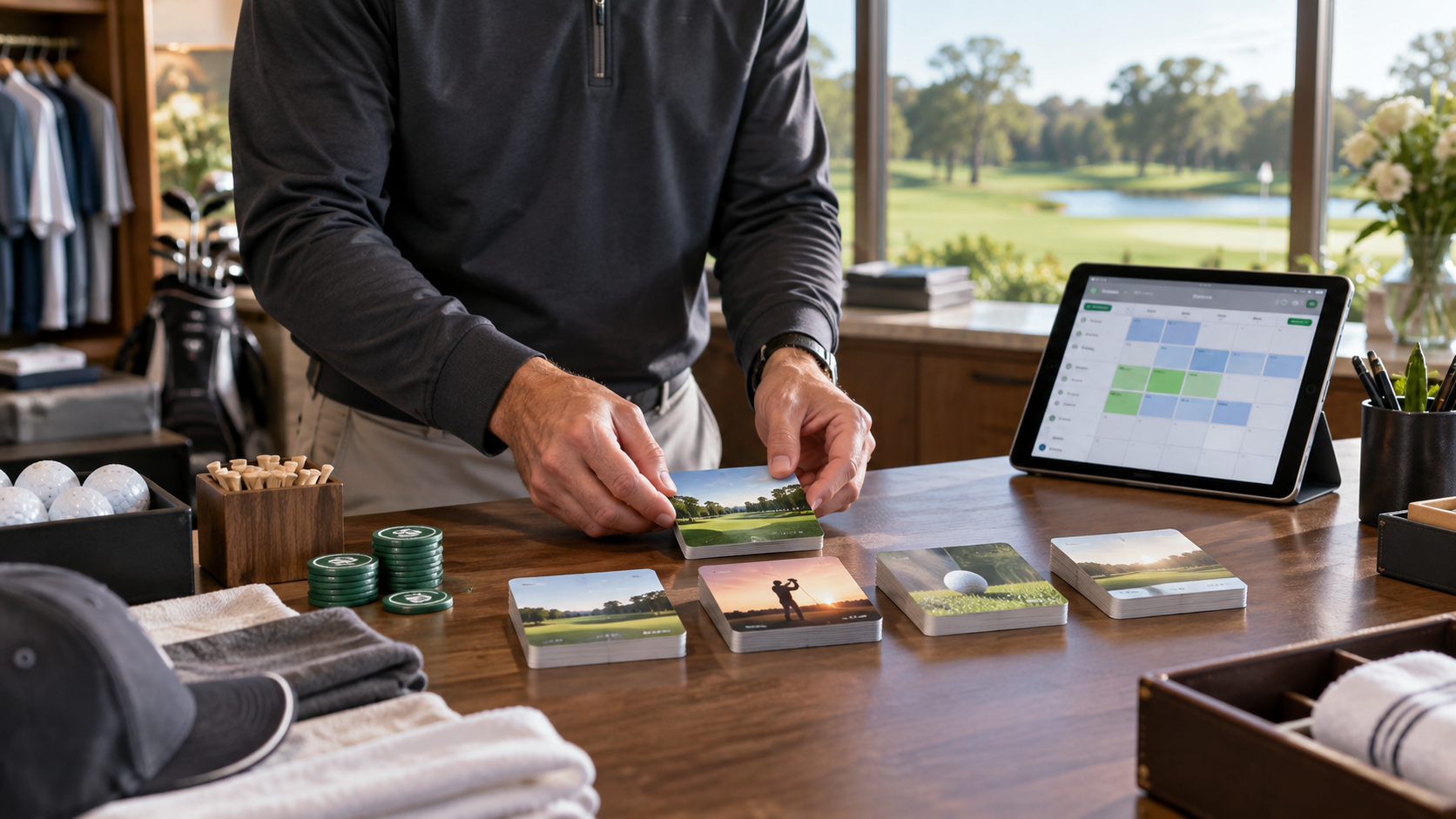
Gift cards and prepaid packages can be more than a seasonal side item. For golf course operators, they can turn existing demand into earlier cash flow, introduce new players to the facility, and keep customers connected between peak booking windows. The challenge is that many courses sell offers that are easy to describe at the counter but hard to redeem cleanly later.
A strong package strategy answers three questions before anything goes live: what inventory are you selling, when can it be used, and how will staff track redemption without slowing down the tee sheet or simulator schedule? When those answers are clear, gift cards, play packs, lesson bundles, and simulator packages become practical revenue tools instead of loose promises.
This guide is for owners, GMs, head pros, municipal operators, and indoor golf managers who want packages that golfers understand, staff can support, and the business can measure.
Start With The Business Goal
Do not begin by discounting random rounds. Start with the operating problem you want the offer to solve. A gift card is different from a five-round weekday pack, and both are different from a winter simulator bundle.
Common goals include:
- Bring in cash before the season: Holiday gift cards, early spring play packs, or opening-week promotions.
- Fill soft demand: Weekday afternoon rounds, shoulder-season tee times, twilight windows, or simulator bays before 5 p.m.
- Increase trial: New golfer packages that include range balls, a beginner clinic, rental clubs, or a first simulator session.
- Grow repeat play: Multi-round packs that make the next booking feel easy and already paid for.
- Bundle instruction: Lesson packages that pair coaching with practice time, simulator sessions, or on-course play.
Each goal needs a different package design. If the goal is to protect weekend revenue, a discounted unrestricted play pack may work against you. If the goal is weekday utilization, the offer should steer golfers toward the times you actually want to fill.
Choose The Right Offer Type
Operators often use the terms gift card, package, pass, and voucher interchangeably, but golfers and staff need sharper definitions. Clear offer types reduce confusion and help your software, payment records, and reporting stay organized.
| Offer Type | Best Use | Watchout |
|---|---|---|
| Gift card | Flexible gift purchases, merchandise, lessons, or booking credit | Define where it can be redeemed and whether cash value expires |
| Play pack | Multiple prepaid rounds or simulator sessions | Protect peak times, holidays, and cart fee assumptions |
| Lesson bundle | Instruction, clinics, junior programs, or player development | Coordinate coach availability and cancellation rules |
| Event or league credit | Leagues, tournaments, outings, and recurring group play | Track payment status by participant, not only by team captain |
| Simulator bundle | Winter demand, practice plans, corporate groups, or off-peak bays | Clarify bay time, player count, peak pricing, and no-show rules |
A simple naming rule helps: the package name should describe the benefit without needing staff translation. “Five Weekday Rounds After 1 p.m.” is clearer than “Summer Saver Pack.” Creative names can work in marketing, but the operational rule still needs to be plain.
Price Packages Without Training Golfers To Wait For Discounts
The best packages feel valuable without undermining your normal rates. Before you publish an offer, compare the package price to the realistic inventory it will use.
For example, if a weekday round is normally $44 and cart is included, a five-round pack at $199 creates an effective price of $39.80 per round. That may be reasonable if it fills soft weekday demand. The same discount on Saturday morning inventory may give away revenue you would have captured anyway.
Use a quick pricing check for every package:
- Rack value: What would these rounds, bays, lessons, or credits normally cost?
- Package price: What does the golfer pay up front?
- Effective discount: Is the discount appropriate for the demand window?
- Redemption limit: Are peak times, holidays, events, and league nights protected?
- Margin impact: Are carts, range balls, coach time, simulator technology fees, and payment costs included?
Small discounts can still sell when the offer is convenient. A $250 gift card with a $25 bonus credit may be easier to understand than a complicated tiered sale. A four-session simulator pack may sell because it helps a golfer commit to winter practice, not because it is the cheapest option in town.
Write Redemption Rules Staff Can Actually Enforce
Most package problems show up after the sale. A golfer arrives on a busy morning with a vague voucher, staff are unsure whether carts are included, and the line at check-in gets longer. Good rules prevent that.
Every offer should answer these questions:
- What is included? Round, cart, range balls, simulator bay, lesson time, merchandise credit, or booking credit.
- When can it be used? Days, times, seasons, holidays, league nights, tournament days, and blackout periods.
- Who can use it? Original purchaser, named golfer, family member, company group, member only, or transferable guest.
- How is it redeemed? Online booking code, staff lookup, stored customer credit, printed certificate, or account balance.
- What happens if plans change? Cancellation window, no-show rule, weather policy, partial redemption, and expiration treatment.
Keep the customer-facing version short, but keep a staff version nearby with exact handling steps. If a package cannot be explained in under 30 seconds at the counter, it is probably too complicated for a busy Saturday.
Make The Online Purchase Path Obvious
A package that only exists as a flyer in the pro shop misses buyers who are ready to purchase from home. Gift buyers are often spouses, parents, adult children, corporate coordinators, or league captains who are not standing at the counter. They need a clean online path.
Promote packages in the places buyers already look:
- Homepage: Add a seasonal module for gift cards or play packs during holiday and spring planning windows.
- Tee time page: Mention relevant packages beside booking inventory, especially off-peak play packs.
- Email and SMS: Segment by frequent players, lapsed golfers, members, league participants, and simulator customers.
- Google Business Profile posts: Use local search visibility for holiday gifts, lessons, and indoor golf offers.
- Confirmation messages: After a round, invite golfers into the next logical package instead of a generic promotion.
The purchase flow should confirm the buyer, recipient if applicable, amount or included uses, restrictions, and delivery method. If staff must manually create the package after purchase, document that handoff so buyers do not wait for confirmation.
Track Liability, Redemption, And Repeat Revenue
Gift cards and prepaid packages are not only marketing campaigns. They also create accounting and operational questions. Operators need to know how much was sold, how much was redeemed, what remains outstanding, and whether package buyers returned after using the offer.
At a minimum, review these numbers monthly:
- Package sales: Total dollars sold by offer type and channel.
- Redemption rate: Uses redeemed versus uses sold.
- Outstanding balance: Remaining gift card value, credits, or unused package uses.
- Inventory impact: Which days and times packages are consuming.
- Follow-on revenue: Carts, merchandise, lessons, food and beverage, additional rounds, or renewed packages.
This is where a small offer can become a useful operating signal. If simulator packs sell well but redemption clusters into already-busy evenings, adjust the next offer toward daytime bays. If weekday play packs create repeat visits from local golfers, build a renewal campaign before the final use is redeemed.
Use A Simple Offer Scorecard Before Launch
Before publishing your next gift card or package, score it from 1 to 5 in five areas:
- Clear value: Will the buyer understand the benefit immediately?
- Easy to explain: Can staff describe the rules quickly?
- Easy to redeem: Can the golfer use it without extra calls or manual work?
- Protects peak inventory: Does it avoid discounting the highest-demand times?
- Creates repeat play: Does it encourage a next booking, lesson, simulator session, or visit?
If the offer scores below 20 out of 25, tighten the rules before launch. A package with a slightly smaller discount and cleaner redemption usually performs better than a bigger discount that confuses golfers or staff.
To make this easier, build your next offer with a Golf Course Offer Builder Worksheet. Use it to define the package goal, pricing guardrails, redemption workflow, promotion plan, and scorecard before you turn the offer on.
Turn Packages Into A Repeatable Revenue System
The most useful package strategy is not a one-time sale. It is a repeatable rhythm: holiday gift cards, spring play packs, summer lesson bundles, fall league credits, winter simulator packages, and targeted renewals based on actual customer behavior.
BookATee helps operators connect those pieces by bringing bookings, payments, customer records, simulator reservations, and reporting into one workflow. That makes it easier to sell prepaid offers, keep redemption visible, and understand which packages create profitable repeat visits.
Start with one offer that solves a specific operating goal. Price it clearly, protect your highest-demand inventory, publish it online, train staff on redemption, and review the results after 30 days. The courses that win with gift cards and play packs are not just selling discounts; they are making it easier for golfers to commit to coming back.