Post-Round Surveys: The Feedback Loop Most Courses Are Missing
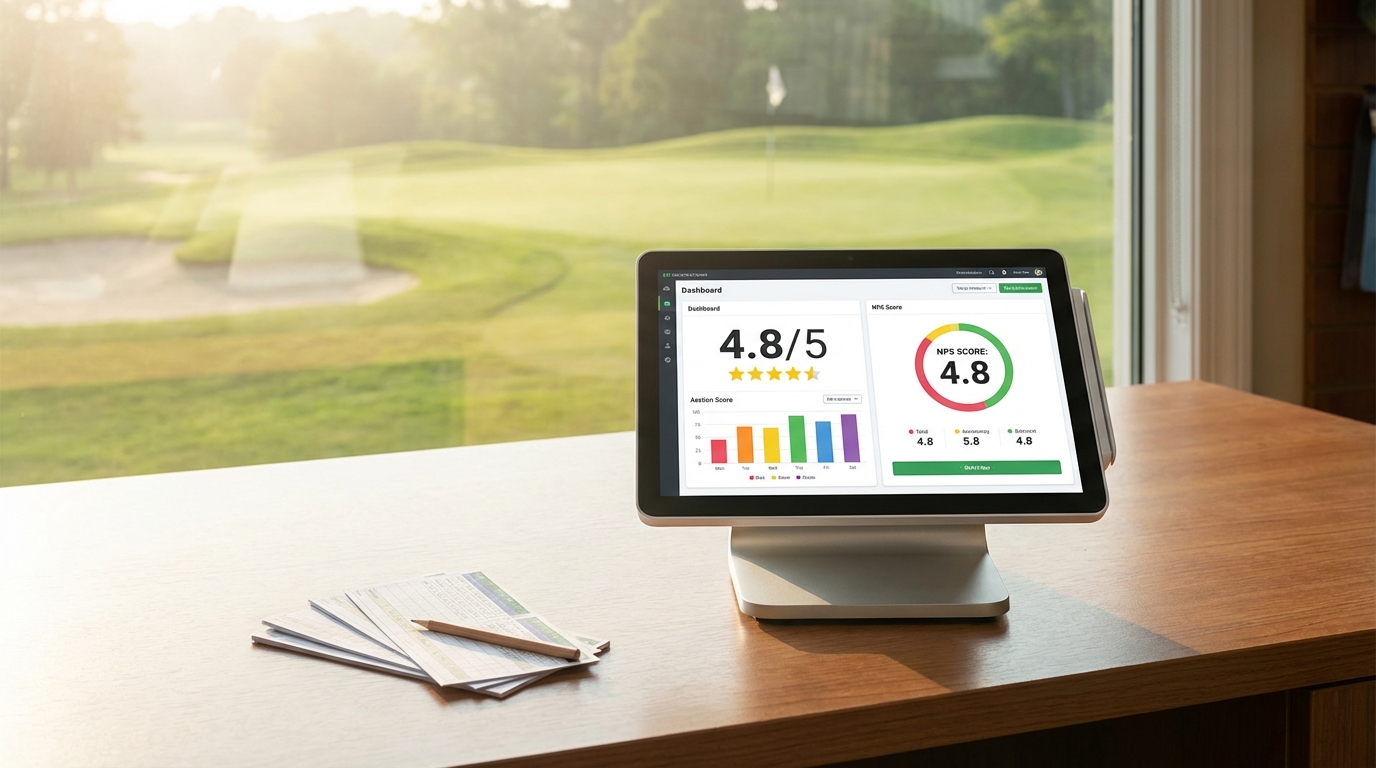
Ask any golf course operator how their golfers feel about the course, and you'll get one of two answers: "We get great feedback" or "No one really complains." Both responses sound positive. Neither is based on actual data.
The reality is that most golf courses have no systematic way to collect feedback from golfers after their round. The comment cards on the counter go unread. The occasional Yelp review is either a glowing 5-star or an angry 1-star from someone who had a bad day. And the casual "How was your round?" at the pro shop counter gets the same polite answer every time: "Great, thanks."
That's not feedback. That's noise. And the gap between what golfers actually think and what operators think golfers think is where retention problems hide.
The Feedback Blind Spot
Golf courses invest heavily in the playing experience—greens maintenance, cart fleet, pace of play management, food and beverage. But almost none of them have a structured way to measure whether those investments are landing with golfers.
Consider what you don't know without a feedback system:
- Why did that regular stop coming? They didn't complain. They didn't cancel a membership. They just... stopped booking. Was it the greens? The pace? The price? You'll never know.
- How does the experience on Saturday morning compare to Wednesday afternoon? The same course can feel like two different facilities depending on the day and the crowd.
- Are your staff interactions helping or hurting? A friendly starter can make a golfer's day. An indifferent one can ensure they don't come back. But you won't hear about either unless you ask.
- What would golfers pay more for? Better range balls? A halfway house? GPS on the carts? The answers might surprise you—but only if you ask the question.
Without feedback data, every decision about the golfer experience is based on instinct. Instinct is fine for reading a putt. It's a terrible way to run an operation.
Why Traditional Feedback Methods Fail
It's not that courses haven't tried. The problem is that most feedback methods in golf are fundamentally broken:
Comment Cards
The paper card sitting next to the register has a response rate of roughly 1–2%. The only people who fill them out are extremely happy or extremely angry. You get the extremes but miss the 95% of golfers in the middle—the ones who had an "okay" round and are quietly deciding whether to come back.
Online Reviews
Google and Yelp reviews are public, unstructured, and arrive on their own timeline. You can't ask follow-up questions. You can't segment by day of week or time of day. And by the time someone writes a negative review, the damage to your reputation is already done.
Verbal Feedback at the Counter
Golfers are polite. They're not going to tell the person who checked them in that the greens were bumpy and the cart paths need repaving. Social pressure biases every face-to-face interaction toward positivity.
Annual Surveys
Some courses send out a survey once a year. By then, the golfer barely remembers which rounds were at your course and which were at your competitor. The data is stale before it's collected.
What Post-Round Surveys Actually Look Like
A post-round survey is fundamentally different from all of these. It's automated, timely, specific, and low-friction.
Here's how it works in practice:
- Golfer completes their round (detected by check-in time + average round duration, or manual check-out)
- Survey is triggered automatically—typically via SMS or email, 1–2 hours after the estimated round completion
- Golfer taps a link and lands on a short, mobile-friendly survey (3–5 questions, takes under 60 seconds)
- Responses are collected and scored—NPS, category ratings, and open-ended comments are logged against that specific booking
- Operator sees results in real time—aggregated dashboards, trend lines, and alerts for negative responses
The key difference: the survey reaches the golfer while the experience is still fresh, through a channel they're already using (their phone), with questions specific enough to generate actionable answers.
The Questions That Matter
A good post-round survey isn't a 20-question dissertation. It's surgical. Here are the questions that consistently deliver the most actionable data:
The NPS Question
"On a scale of 0–10, how likely are you to recommend [Course Name] to a friend?"
This single question gives you a Net Promoter Score—the gold standard metric for customer loyalty across every industry. Scores of 9–10 are promoters, 7–8 are passives, and 0–6 are detractors. Track this weekly and you'll see the health of your course at a glance.
Category Ratings
"Rate the following (1–5 stars): Course Conditions, Pace of Play, Staff Friendliness, Value for Price, Overall Experience"
These five categories cover the core dimensions golfers care about. When your NPS dips, the category ratings tell you why. If pace of play drops to 2.8 stars on Saturday mornings, you know exactly where to focus.
The Open-Ended Follow-Up
"Anything else you'd like us to know?"
This is where the gold is. Golfers who take the time to write a sentence or two are giving you specific, unstructured feedback that no rating scale can capture: "The bunker on 7 needs sand," "Your starter was amazing today," "The cart GPS was wrong on hole 12."
The Conditional Deep Dive
If a golfer rates pace of play below 3 stars, trigger a follow-up: "What contributed to slow play today?" with options like "Group ahead was slow," "Too many groups on the course," "Our group had a beginner," "Course setup took too long." Now you have diagnostic data, not just a complaint.
What You Can Do With the Data
Survey data is only valuable if it drives action. Here's what becomes possible once you're collecting structured feedback consistently:
Spot Problems Before They Become Crises
A gradual decline in "Course Conditions" ratings over three weeks tells you something is off before the angry Google review lands. Maybe the mowing schedule slipped. Maybe the irrigation has a dry spot. You can investigate and fix it while it's still a minor issue.
Segment by Day, Time, and Season
Your Saturday morning experience might score a 9.2 NPS while your Sunday twilight scores a 6.8. That's two very different products running on the same course. Maybe Sunday twilight needs a marshal, or the pace standard is slipping after the afternoon groups stack up. Without segmented data, you'd never see the difference.
Measure the Impact of Changes
Repaved the cart paths? Hired a new starter? Changed your tee time intervals from 8 to 10 minutes? Survey data shows whether golfers actually noticed and whether it moved the needle on satisfaction. No more guessing whether that $50,000 investment was worth it.
Identify and Recover Detractors
When a golfer gives you a 3 out of 10 on the NPS question, that's a golfer you're about to lose—if you haven't already. But now you know about it immediately. A quick phone call or a personal email from the head pro, acknowledging their feedback and offering to make it right, can turn a detractor into a loyal customer. Most golfers are shocked that anyone noticed, let alone reached out.
Build a Case for Investment
Need to justify a new fleet of carts to ownership? Present six months of survey data showing cart condition as your lowest-rated category, with specific golfer comments about broken cupholders and faded seat covers. Data wins budget arguments that anecdotes can't.
Response Rates: Better Than You Think
The biggest concern operators have about surveys is: "Will anyone actually fill them out?"
With post-round surveys delivered via SMS within 2 hours of round completion, courses consistently see 25–40% response rates. That's not a typo. Compare that to the 1–2% response rate on paper comment cards or the handful of Google reviews you get each month.
Why so high? Three reasons:
- Timing. The experience is fresh. They're sitting in the car on the way home or having a beer at the 19th hole. The round is top of mind.
- Channel. SMS has a 98% open rate. The golfer doesn't need to remember to do anything—the survey comes to them.
- Brevity. A 60-second survey respects their time. Five questions, tap-tap-tap, done. No login. No app download. Just a link.
At 30% response rates across 100 rounds per day, you're collecting 30 data points daily. That's 900 data points per month. That's a statistically meaningful dataset that reveals patterns no amount of casual conversation ever could.
The Retention Connection
Here's the business case that makes this all matter: it's 5–7x more expensive to acquire a new golfer than to retain an existing one.
Every golfer who silently stops coming back is a revenue leak you didn't even see. Post-round surveys plug that leak by giving you early warning when satisfaction is slipping and specific intelligence about what to fix.
Courses that implement post-round surveys typically report:
- 12–18% improvement in repeat booking rates within the first season
- Faster response to maintenance issues (golfers are remarkably good at spotting course condition problems)
- Higher Google review ratings—because satisfied golfers who've already given you feedback are more likely to share publicly when asked
- Better staff accountability—when the team knows golfers are rating their interactions, the baseline level of service rises
Getting Started
You don't need to build a survey platform from scratch. The key requirements are:
- Integration with your booking system. The survey should trigger automatically based on booking data—no manual list-building or spreadsheet exports.
- SMS delivery. Email surveys get buried. SMS gets opened. If your booking system collects phone numbers (and it should), you already have the delivery channel.
- A dashboard, not just raw data. NPS trends, category breakdowns by day/time, and flagged negative responses should be visible at a glance—not locked in a spreadsheet.
- Customizable questions. Every course is different. You should be able to adjust questions, add seasonal prompts, or test new categories without calling a developer.
- Automated alerts. When a golfer gives you a score below a threshold, someone on your team should know about it within minutes—not when they remember to check the dashboard next week.
The best survey systems feel invisible to the operator. Set it up once, and every golfer who books and plays automatically gets a chance to share their experience. The data flows in, the trends emerge, and suddenly you're making decisions based on what 300 golfers told you last month instead of what one person mentioned at the counter.
The Bottom Line
You wouldn't run a restaurant without reading your reviews. You wouldn't run a hotel without checking guest satisfaction scores. Yet most golf courses operate with almost zero structured feedback from the people who matter most: the golfers who are deciding right now whether to book their next round with you or your competitor down the road.
Post-round surveys aren't a nice-to-have. They're the missing feedback loop that turns every round into a data point and every data point into an opportunity to get better. The courses that figure this out first will be the ones that golfers keep coming back to.